Alto and tenor clef note practice
Learn the nine notes on the alto and tenor staves, then drill them until you can name each one at a glance. Free, in your browser, no signup.
 Practice alto clef notes →
Free · works on your phone · no signup
What the C clef shows
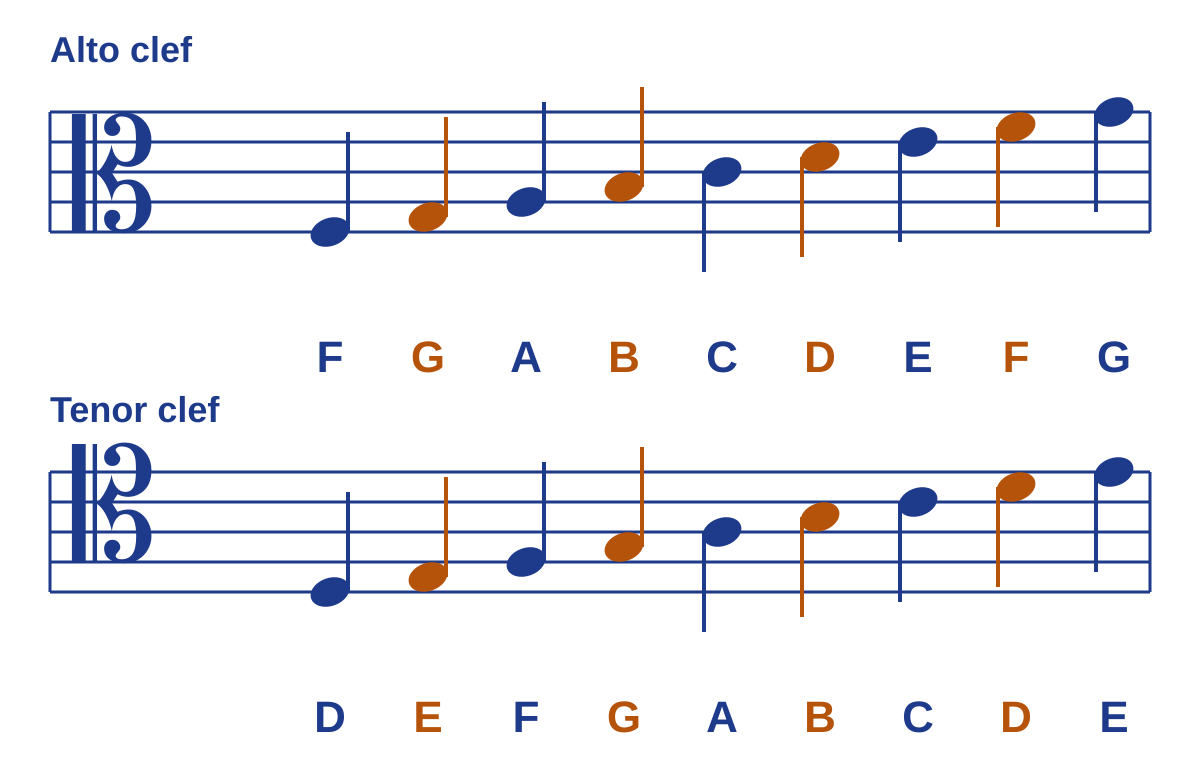
The alto and tenor clefs are the same symbol, the C clef. Its two curves meet on one line of the staff, and that line is middle C. The clef moves, and every other note moves with it.
How to read the alto clef
In the alto clef, middle C is the middle line of the staff. The viola reads it almost all the time.
The five lines, from bottom to top, are F A C E G: the word face, then G. The four spaces are G B D F.
How to read the tenor clef
In the tenor clef, middle C is the second line from the top. Cello, bassoon and trombone switch to it for high passages, so they need fewer ledger lines.
The five lines, from bottom to top, are D F A C E: D, then the word face. The four spaces are E G B D.
How to practice
If you already read the treble or bass clef, it’s tempting to translate each note from there, but that stays slow. Short daily drills teach you to recognize each note directly.
The Alto Basics level shows one note at a time from the bottom line (F) to the top line (G). Name it before the timer runs out. ClefHero tracks your accuracy and speed and shows which notes you miss most. For the tenor clef, start Tenor Basics, which runs from D to E.
Practice alto clef notes →