Ledger line notes practice
Ledger lines are the short lines above and below the staff. Learn which notes they show, then drill them until you can name each one at a glance. Free, in your browser, no signup.
 Practice treble ledger lines →
Free · works on your phone · no signup
What ledger lines are
A staff has only five lines, so notes too high or too low for it get short extra lines of their own, called ledger lines. They continue the staff: each step, from a line to the next space or from a space to the next line, is still the next letter.
The best-known ledger line note is middle C. It sits on one ledger line below the treble staff and on one ledger line above the bass staff, and it is the same note in both.
Treble clef ledger lines
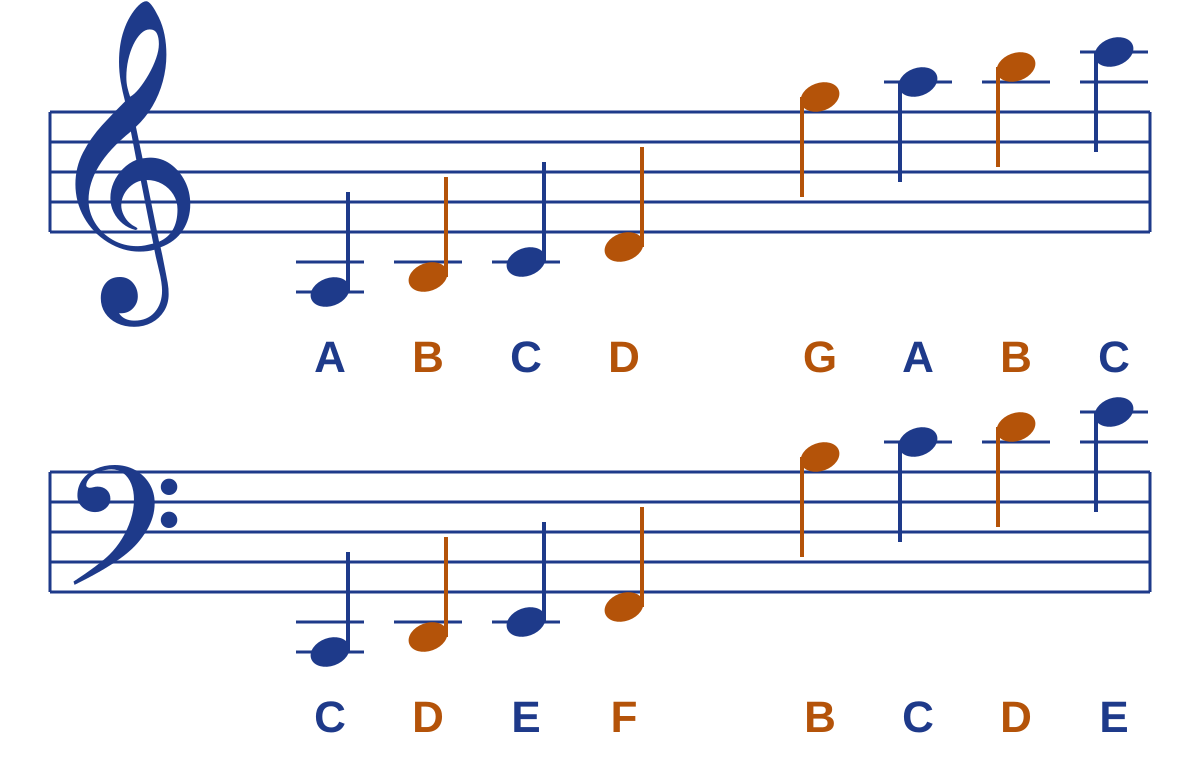
Above the staff: the top line is F and G sits just above it. Going up, the ledger lines are A, C, E, which spell the word ace.
Below the staff: the bottom line is E and D hangs just below it. Going down, the ledger lines are C, A, F, and the first of them is middle C.
Bass clef ledger lines
Above the staff: the top line is A and B sits just above it. Going up, the ledger lines are C, E, G, and the first of them is middle C.
Below the staff: the bottom line is G and F hangs just below it. Going down, the ledger lines are E, C, A.
How to practice
Counting up from the staff gets the right answer, but it’s too slow for real music. Learn the first ledger line on each side as a landmark, then short daily drills teach you to recognize the rest directly. If the staff itself isn’t automatic yet, start with the treble clef or bass clef notes.
The Treble Intermediate level shows one note at a time from middle C to the A above the staff, so one ledger line on each side. Name it before the timer runs out. ClefHero tracks your accuracy and speed and shows which notes you miss most. Bass Intermediate does the same from E to middle C. For two ledger lines, try Treble Challenge or Bass Challenge.
Practice treble ledger lines →