Learn to read sheet music notes
Reading music starts with naming the notes on the staff. Here is how the staff works, and a free game to practice until it’s automatic.
 Start practicing →
Free · works on your phone · no signup
The staff and the musical alphabet
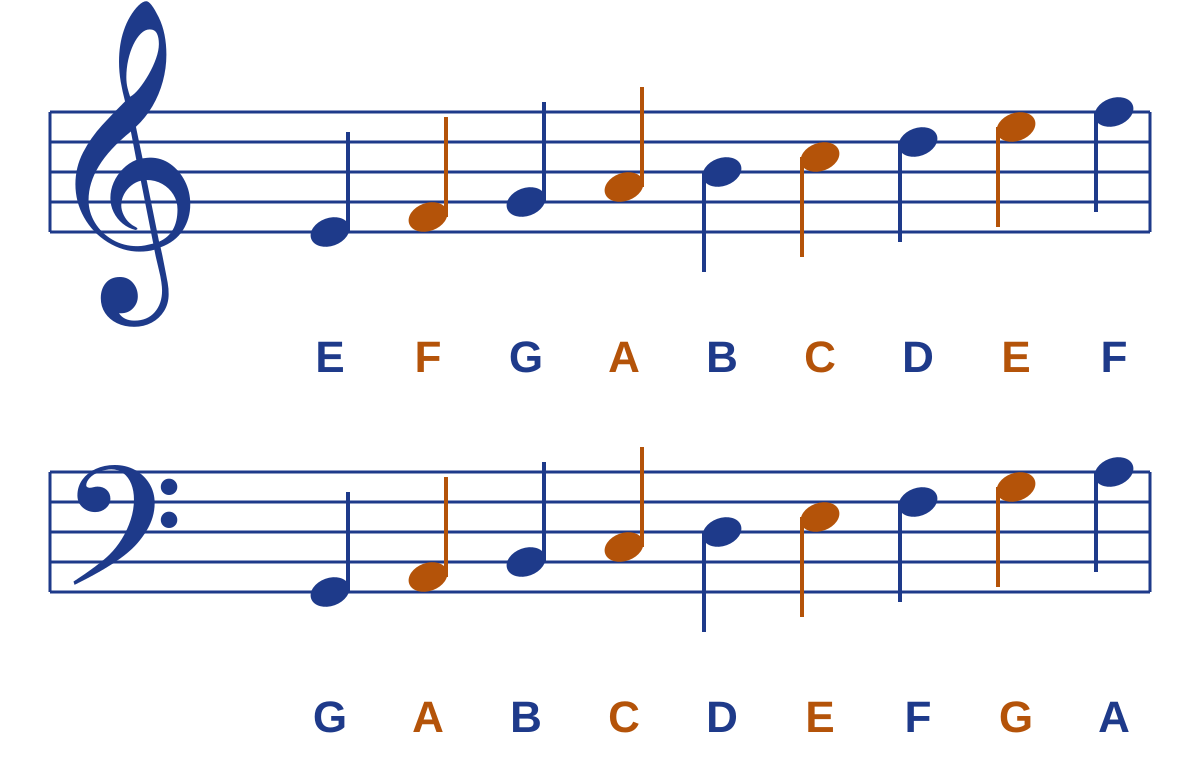
Music uses only seven letters: A B C D E F G, then it starts again at A. Notes are written on a staff of five lines and four spaces. Each step up, from a line to the next space or from a space to the next line, is the next letter.
Which letter goes where depends on the clef at the start of the staff. Piano music uses two staves joined together, called the grand staff: the treble clef on top and the bass clef below.
Treble clef and bass clef
In the treble clef, the lines from bottom to top are E G B D F (“Every Good Boy Does Fine”) and the spaces spell F A C E.
In the bass clef, the lines are G B D F A (“Good Boys Do Fine Always”) and the spaces are A C E G (“All Cows Eat Grass”).
Notes above or below the staff get short extra lines called ledger lines. Middle C sits on one ledger line between the two staves. A sharp (♯) raises a note by a half step and a flat (♭) lowers it.
How to practice
Mnemonics help at first, but fluent readers recognize each note instantly. The fastest way there is a few minutes of note-naming drills every day.
ClefHero shows one note at a time: name it before the timer runs out. Start with the treble staff, then try the bass clef, ledger lines, sharps and flats, and the alto and tenor clefs. It tracks your accuracy and speed and shows which notes you miss most.
Start practicing →