Music note flashcards
A note appears on the staff and you name it, one card after another, against the clock. Like paper flashcards, but they shuffle themselves and keep score. Free, in your browser, no signup.
 Start the treble clef flashcards →
Free · works on your phone · no signup
How the flashcards work
Each card is one note on a staff. Tap its name, or its key on an on-screen piano. Get it right and the next card appears; get it wrong and you try again until you find it. A round lasts 60 seconds, so it fits into any practice session.
Paper flashcards make it easy to keep drawing the notes you already know. ClefHero picks the notes at random from the level’s range and, at the end of each round, shows your accuracy, your speed and the notes you missed most, so you know which cards to work on.
You can name the notes with letters (C D E), solfège (do re mi) and other systems, and switch during a round.
Which deck to start with
New to reading music? Start with the treble clef notes: the nine notes from the bottom line (E) to the top line (F). If you play a low instrument or the left hand of the piano, start with the bass clef deck in Bass Intro.
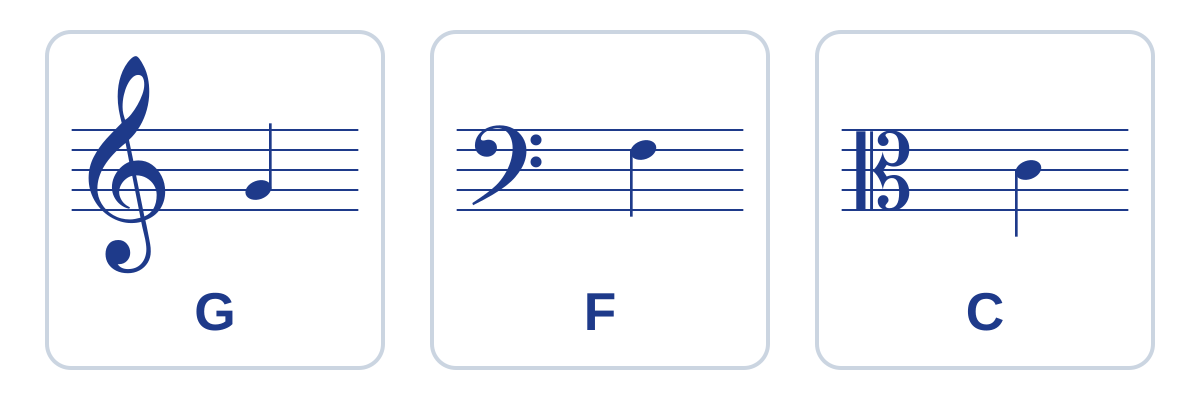
Once the staff is easy, add the notes on ledger lines above and below it. Viola players can drill the alto clef, and cellists, bassoonists and trombonists the tenor clef.
How to practice with flashcards
Go for speed only once you’re accurate: a wrong answer given quickly teaches the wrong note. A round or two every day works better than a long session once a week, because recall improves each time you bring a note back to mind.
If you’re just starting, read how the staff and clefs work first, then come back to the cards.
Start the treble clef flashcards →